
 English
 日本語
日本語
 한국어
한국어
 简体中文
简体中文
 繁體中文
繁體中文
 Italiano
 español
 Deutsch
 Русский


Watching movies is one of the most enjoyable ways to support English learning. When used thoughtfully, movies can help learners improve listening skills, vocabulary, and natural communication.
Movies expose learners to real spoken English. Unlike textbook dialogues, film conversations include natural speed, emotion, and everyday expressions. This helps learners become more familiar with how English sounds in real situations.
Another benefit of watching movies is learning vocabulary in context. Words and expressions become easier to remember when they are connected to a story, characters, and emotions. This makes learning feel more natural and less mechanical.
Movies also help learners understand tone, body language, and cultural cues. Even without understanding every word, learners can follow meaning through facial expressions and situations, which supports comprehension and confidence.
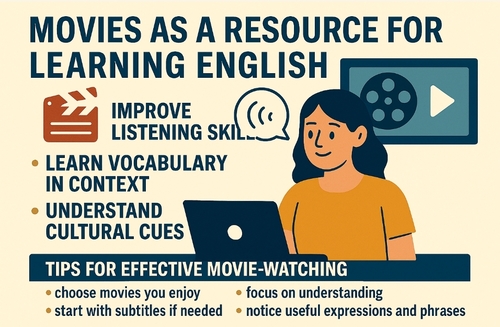
To make movie-watching effective for language learning, it is helpful to:
-
choose movies you enjoy
-
start with subtitles if needed
-
focus on understanding meaning, not every word
-
notice useful expressions and phrases
Watching movies should not replace structured learning, but it can be a powerful support. When learners combine enjoyment with awareness, progress becomes both effective and motivating.


回應 (0)