
 English
 日本語
日本語
 한국어
한국어
 简体中文
简体中文
 繁體中文
繁體中文
 Italiano
 español
 Deutsch
 Русский



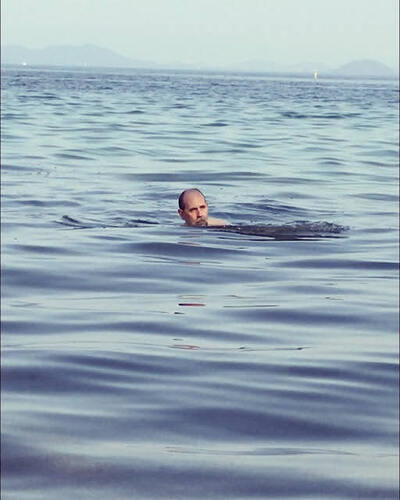
Last summer we moved back to Shiga and once again live beside Lake Biwa. Recently I was looking through some old photos and noticed that late May is usually when I begin swimming in the lake each year.
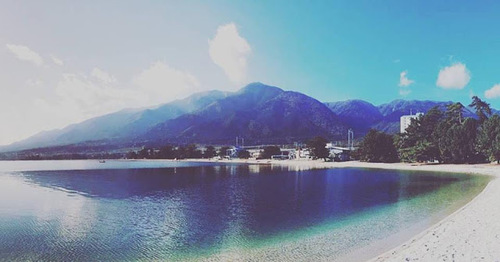
Many students are surprised when I mention swimming in Lake Biwa. Some people imagine lakes as dark or muddy places, but the middle and northern areas of the lake are actually very clean and receive high water quality ratings.
Swimming in a lake feels quite different from swimming in the sea. Because there is no salt in the water, there is less buoyancy. In the ocean, the water naturally pushes the body upwards, but in a lake you have to kick a little harder to stay afloat. The sea also tends to lift your legs while swimming. In fresh water, swimming can feel slightly heavier at first.
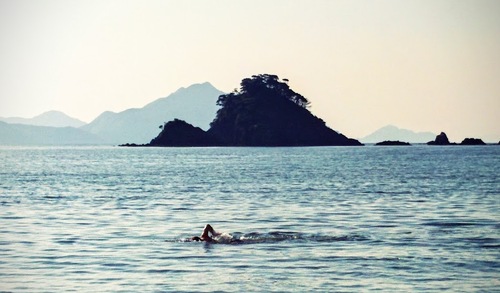
On the other hand, lakes are often calmer than the sea because there are usually fewer waves. After a while I began to enjoy the quietness of it. Floating in still water with almost nobody around feels surprisingly peaceful.
I also sometimes practice yoga in the lake. That probably sounds a little strange. Occasionally a fisherman passes by and gives me a confused look, but the beach near my house is usually deserted, so it feels like a private space.
It made me think about how many enjoyable activities seem unusual from the outside. Sometimes the things that look strange at first become the experiences we enjoy most.
Language Focus: Talking About Experiences More Naturally
Many English learners often use:
- fun
- interesting
- enjoy
These are useful words, but native speakers often use more specific vocabulary to describe experiences and feelings.
Instead of “fun”
Try:
- relaxing
- refreshing
- peaceful
- satisfying
- energizing
- calming
- therapeutic
- exhilarating
Examples:
- “Swimming in the lake is very relaxing.”
- “I find it surprisingly refreshing.”
- “The quiet atmosphere feels calming.”
Instead of “not fun”
Try:
- exhausting
- awkward
- uncomfortable
- intimidating
- overrated
- stressful
Examples:
- “Sea swimming can be exhausting when the waves are strong.”
- “Yoga outdoors felt awkward at first.”
- “Cold water can feel uncomfortable in the beginning.”
Useful Expressions
Buoyancy
The ability to float in water.
- “Salt water gives more buoyancy than fresh water.”
Stay afloat
To remain floating on the surface of the water.
- “In a lake you have to kick harder to stay afloat.”
Cool off
To escape the heat or become cooler.
- “I like to cool off in the lake during summer.”
Take up
To begin a new hobby or activity.
- “Many people take up outdoor hobbies in spring.”
Comparison Language
- “The lake is calmer than the sea.”
- “Lake swimming is not as easy at first.”
- “The beach near my house is not as crowded as most beaches.”




回應 (0)