
 English
 日本語
日本語
 한국어
한국어
 简体中文
简体中文
 繁體中文
繁體中文
 Italiano
 español
 Deutsch
 Русский


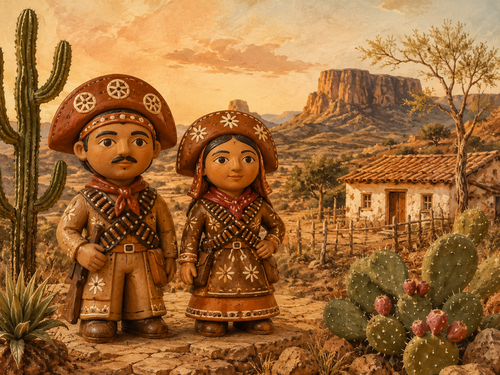
When people first discover the cangaço, they often notice its striking visual identity: decorated leather hats, embroidered clothing, scarves and ammunition belts.
But the cangaço was much more than an aesthetic. It was a complex and controversial part of Brazilian history.
A phenomenon of the sertão
The cangaço was a historical and social phenomenon that developed in the Brazilian Northeast, particularly in the semi-arid region known as the sertão.
Armed groups travelled through rural areas during the nineteenth and early twentieth centuries. Their world was marked by drought, poverty, political disputes, social inequality and limited state protection.
However, this context does not mean that the cangaceiros were simply victims or survivors.
They also robbed properties, attacked towns and committed acts of violence. Some Brazilians remember them as rebels who challenged powerful landowners and local authorities. Others regard them primarily as criminals and outlaws.
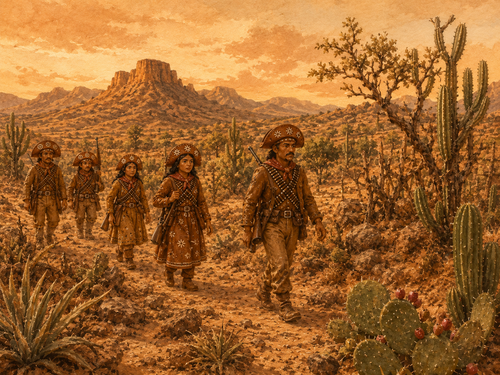
There is no single interpretation of the cangaço. Even historical studies distinguish different kinds of cangaço and different motivations, including revenge, political conflict, family disputes and rural banditry.
Who were the cangaceiros?
A male member of one of these groups was called a cangaceiro.
A female member was called a cangaceira.
The group itself could be called a bando.
Here are some useful Portuguese words:
- cangaço — the historical phenomenon
- cangaceiro — a male member
- cangaceira — a female member
- bando — a band or group
- sertão — the semi-arid backlands
- seca — drought
- couro — leather
- chapéu — hat
- bordado — embroidery
Notice that cangaceiro and cangaceira change according to gender, just like many other words in Portuguese.
A memorable visual identity
The clothes worn by the cangaceiros were both practical and symbolic.
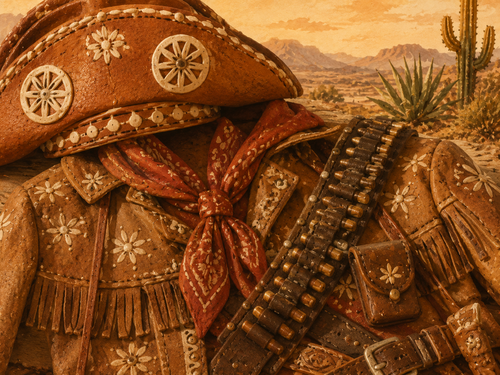
Leather offered protection in the dry landscape of the caatinga, while the hats, embroidery, metal ornaments, scarves and bandoliers created a distinctive visual identity.
Historical photographs taken during the 1930s helped preserve this appearance and contributed to the way the cangaço is remembered in Brazilian art and popular culture.
Lampião and Maria Bonita
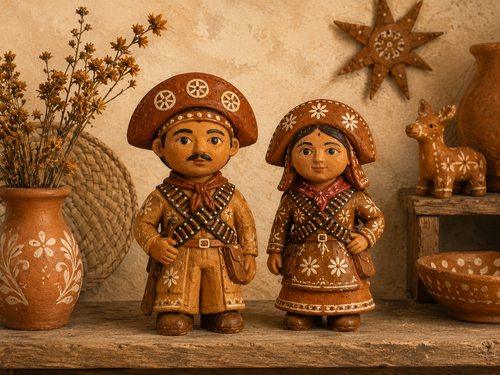
The best-known names associated with the cangaço are Lampião and Maria Bonita.
Lampião became the most famous cangaceiro, while Maria Bonita became the most famous cangaceira. Their lives have inspired books, films, songs, cordel literature and many forms of popular art.
Instead of using realistic portraits, we can also represent them through bonecos de barro, or clay figures. These handmade sculptures are strongly connected to the folk-art traditions of Caruaru and Alto do Moura, in the state of Pernambuco.
The clay figures do not tell us exactly what Lampião and Maria Bonita looked like. They show us how these historical characters continue to live in Brazilian cultural memory.
More than an aesthetic
The cangaço remains visually fascinating, but it should not be reduced to beautiful hats and embroidered leather.
For some people, it represents resistance, survival and the difficult history of the sertão. For others, it recalls banditry, fear and violence.
Both perspectives are part of the conversation.
Learning Portuguese is also learning that one word can carry history, disagreement, memory and identity.


Comments (0)