
 English
 日本語
日本語
 한국어
한국어
 简体中文
简体中文
 繁體中文
繁體中文
 Italiano
 español
 Deutsch
 Русский


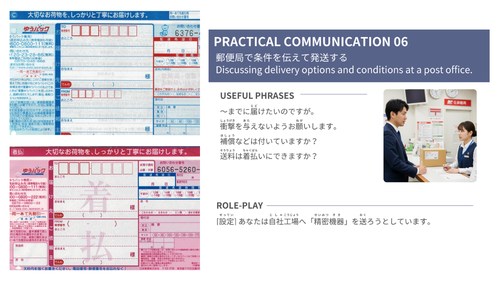
まず「元払い」は、荷物を送る人が送料を支払う方法です。お店で商品を買ったときや、プレゼントを送るときなど、一般的によく使われます。 一方、「着払い」は、荷物を受け取る人が送料を支払う方法です。返品や、相手に送料を負担してもらいたいときによく使われます。
ビジネス日本語のレッスンでは、郵便局でのやり取りなど、実際の場面を想定したロールプレイも行っています。興味のあるトピックだけ選んで受講することもできますので、ぜひご参加ください。
When sending a package in Japan, you will often see the terms “Motobarai (prepaid)” and “Chakubarai (cash on delivery).” Both are delivery methods, and the key difference is who pays the shipping fee. “Motobarai” is sometimes also called “Hatsubarai.”
First, “Motobarai” means that the sender pays the shipping fee. It is commonly used when buying items from a store or sending a gift. On the other hand, “Chakubarai” means that the receiver pays the shipping fee. It is often used for returns or when you want the recipient to cover the shipping cost.
In my Business Japanese lessons, we also practice role-plays based on real situations, such as conversations at the post office. You can choose only the topics you are interested in, so feel free to join!
在日本寄送包裹時,常常會看到「元払い(預付)」和「着払い(到付)」這兩個詞。兩者都是配送方式,重點在於「由誰支付運費」。「元払い」有時也會被稱為「発払い」。
「元払い」是由寄件人支付運費的方式,像是在商店購物或寄送禮物時,通常會使用這種方式。
相對地,「着払い」是由收件人支付運費的方式,常用於退貨,或希望對方負擔運費的情況。
在我的商務日語課程中,也會透過郵局等實際情境進行角色扮演練習。
您可以只選擇有興趣的主題來學習,歡迎隨時參加!
您可以只選擇有興趣的主題來學習,歡迎隨時參加!




コメント (0)