
 English
 日本語
日本語
 한국어
한국어
 简体中文
简体中文
 繁體中文
繁體中文
 Italiano
 español
 Deutsch
 Русский


「おまえ、いつも食べてるよね?」…いや、いつも じゃないし!
今日は 使えると べんりな 頻度(ひんど/frequency)の副詞(ふくし/adverbs)の整理(せいり)!
(English below ↓)
「いつも」って英語で言うと ”always” になるけど、 日本人が使う「いつも」って
実は 下のようなニュアンスなんです。
・彼は いつも 食べている ≠ he is always eating.
= 私が彼を見るときは いつも食べている
= 「~の時は 必ず~」
他の例:
・ 家の中では いつも すっぴん です。
= 家の中でだけ いつも すっぴん です。
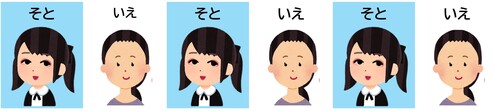
・ おまえは いつも 話を聞かない
= 私が話すときは いつも お前は 話を 聞かない。
もし もっと "always" に近い言い方をしたいときは、
「つねに」 とか 「たえず」 という副詞(ふくし)があります。
でも、ちょっと 硬い言い方なので、毎日の生活では あまり使わないですね。
↓は 上から順に頻度の高い順です。(English below)
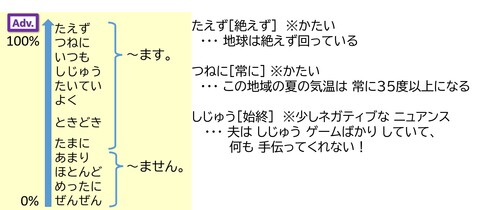
◆今日の まとめ◆
× いつも~ = 100%ずっと~
○ いつも~ = ある条件のとき~
さて、あなたは どのくらい日本語の勉強をしていますか :)
Today’s topic is Japanese frequency adverbs
— very useful if you want to sound more natural!
People often translate いつも (itsumo) as “always.”
But in Japanese, いつも often has a slightly different nuance.
For example:
・彼は いつも 食べている/ kare wa itsumo tabeteiru
≠ He is always eating.
It often means:
→ Whenever I see him, he is eating.
→ Under a certain situation, it happens every time.
More examples:
・家の中では いつも すっぴんです。/ ie no naka dewa itsumo suppin desu
= At home, I’m always without makeup.
(Not 24 hours a day!)
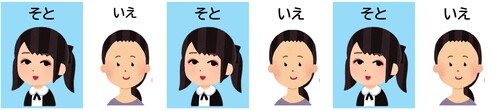
・おまえは いつも 話を聞かない。/ omae wa itsumo hanashi o kikanai
= Whenever I talk to you, you never listen.
If you want something closer to “always” in English, Japanese also has:
・つねに (always / constantly)
・たえず (continuously / without stopping)
But these sound a bit formal, so people don’t use them as often in daily conversation.
*Frequency order (highest → lowest)
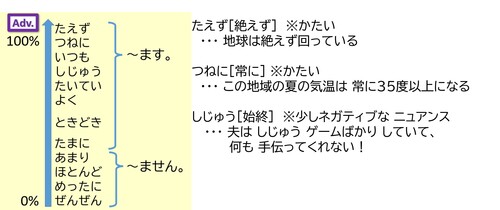
たえず/taezu(絶えず) (formal)
→ continuously / constantly / without stopping
Example:
・地球は 絶えず 回っている。/ chikyuu wa taezu mawatte iru
→ The Earth is constantly rotating.
つねに/tsuneni(常に) (formal)
→ always / constantly
Example:
・この地域の夏の気温は 常に35度以上になる。/
kono chiiki no natsu no kion wa tsuneni 35do ijou ni naru
→ Summer temperatures in this area are always above 35°C.
しじゅう/sijuu(始終) (slightly negative nuance)
→ constantly / all the time (often with annoyance)
Example:
・夫は しじゅう ゲームばかりしていて、何も手伝ってくれない!/
otto wa sijuu geemu bakari shiteite, nanimo tetsudatte kurenai!
→ My husband is constantly playing games and never helps with anything!
◆ Summary ◆
× いつも/itsumo = 100% all the time
○ いつも/itsumo = whenever a certain situation happens
So… how often do you study Japanese? :)




Comments (0)