
 English
 日本語
日本語
 한국어
한국어
 简体中文
简体中文
 繁體中文
繁體中文
 Italiano
 español
 Deutsch
 Русский


I thought this is a good opportunity to give you a glimpse into Egyptian culture, society, and identity.
And maybe together we can learn a deeper lesson from this experience, one about integrity, resilience, and compassion, even when life becomes unfair.
1- A Deep Passion for Football
One thing about Egyptians is that we love football! It is our most popular sport, and almost everyone supports a local team (even if they don't actually watch any matches; it's practially like having an ID).
For a lot of Egyptians, football is an integral part of their national identity, and a passion that connects the community.
While many dedicated football fans follow international leagues and the World Cup religiously, the majority of Egyptians mainly watch our local matches or the African Cup, especially when our national team is playing.
In many ways, this made the Egypt vs. Argentina match even more impactful; because for most Egyptains, the World Cup has always represented a distant dream of glory.
2- The Egyptian Spirit
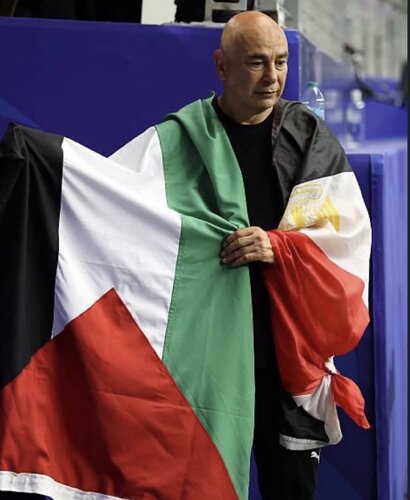
Throughout the tournament, the Egyptian team’s coach made several statements about Palestine, to raise awareness of what is happening there and to remind people of the humanitarian crisis, a cause he wholeheartedly believes in.
It didn’t matter that he was in a country where many opposed those views and tried to stop him from continuing his speech on more than one occasion.
He chose to immediately excuse himself from those press conferences/interviews, rather than be told what he could or could not say.
That same determination carried onto the pitch.
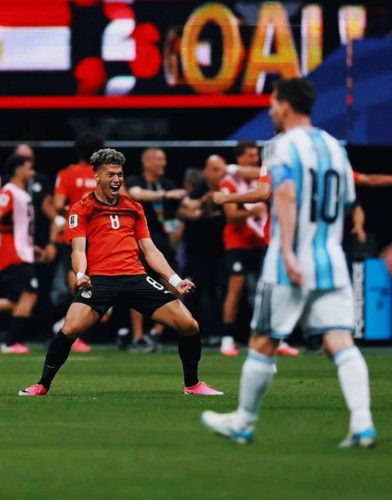
During the match, even after a controversial disallowed goal, the players responded with incredible spirit.
The same group who scored the disallowed goal, using the same tactic, scored another brilliant goal to make up for it within 9 minutes. That is the mindset of Egyptians.
Even though, throughout the match, so much of what was happening made it clear to them (and millions watching) that they were almost being punished for playing a good game. Still, they refused to lose their momentum and kept giving their all.
That dedication, effort, teamwork, and refusal to break are quintessentially Egyptian qualities. (And that is how, as a civilization, Egypt keeps rising again and again after every fall, since the fall of the Old Kingdom.)
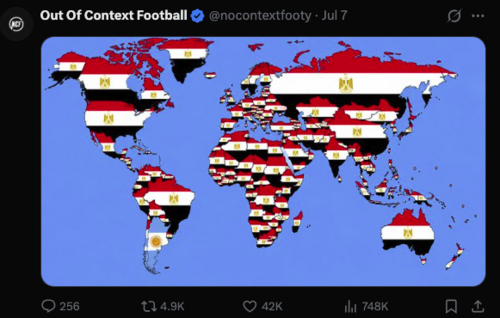
3- Egyptians Are Trusting and Very Self-Aware
I think most Egyptians tend to see the world through a lens of good faith.
They generally expect the good before the bad and assume the best in people until they prove them wrong. (This is why Egyptians are known to be very friendly and welocming to tourists.)
So, with no prior knowledge of how these tournaments really operate, the majority of Egyptians genuinely believed that playing in the World Cup meant exactly what it sounded like: two teams competing on equal terms, where the better team wins fair and square.
Now, even though our national team is one of the strongest in Africa, we still lose international matches more often than we like. And we’re aware of that.
That is why going into this World Cup, we actually expected to lose, because that is usually what happens every time.
So, with a healthy dose of self-awareness, the Egyptian advertisments of the tournament this year were all about making fun of the players, that they were only leaving for a single match, and they’ll be coming back home right away.
We (the people, not the players) went in half expecting that, which is why each win in the tournament was a monumental celebration and a great deal of renewed hope for the entire nation.
4- Egyptians Are Compassionate
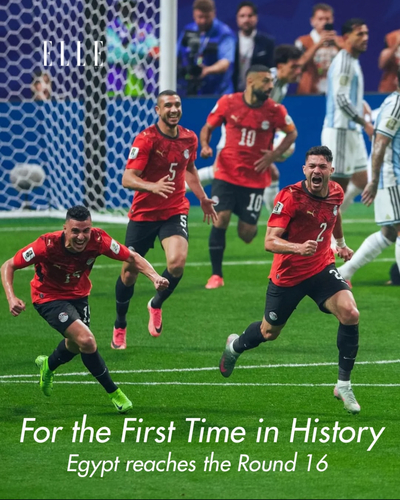
Egyptians are generally deeply compassionate and lead with their hearts, which is why the loss of this match was so heavy on our hearts; everyone felt sad for the team.
We saw them give what some might argue was their best-ever performance in this match, standing toe to toe with the world champions, only for it to be taken away so ruthlessly.
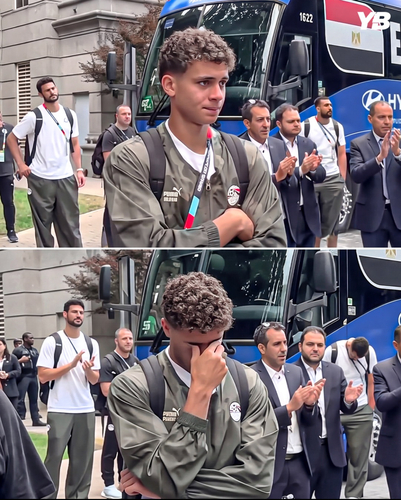
You could see on their faces and in their body language, the moment it all settled in for them, in the last minutes of the match; that all their hard work, all the years of effort to reach this level of skill and getting so close to the dream of millions back home, had slipped away.
How they went from on top of the world throughtout the match, to completely heartbroken at the end has brought men, women, and children to tears.
Everyone of those players has a tremendous background story that got them where they are today. To see them strive so hard, only to face what felt like a message that certain higher tiers are not for people like them, was devastating.
This is also why the injustice witnessed in that match felt like a betrayal of the ideals everyone had attached to the World Cup; seeing the spirit of the game replaced by something else.
It cut through so many levels at once: the disappointment of the result, the realization that the World Cup seems to be just another business, and the crashing of the dream about what that top stage should have symbolized.
5- How Egyptians Cope and Unite
In this wave of distress, we turned to our usual way of dealing with everything: humor, sarcasm, and jokes. (Hence, the self-depricating humor of the ads mentioned earlier.)
People started joking about being “stuck” in the day of the match, unable to move on; asking what life was like before the match and how do we go back; joking about starting a group therapy for PTSD over the match; and laughing about how traumatized we have all become now.
This is how we process any difficult situations.
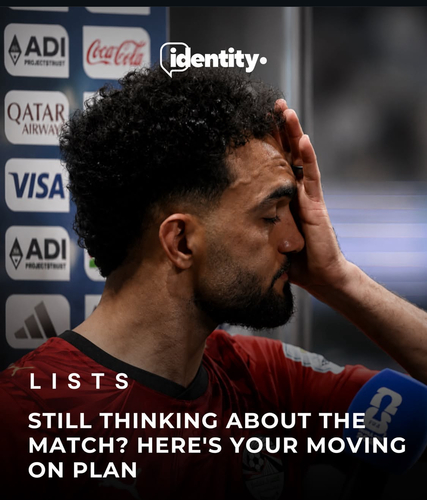
At the same time, this brought us together in unity that surprised many around the world. When most fans would be mad at their players for losing, we were mad on behalf of them.
Following the match, everyone in Egypt turned to social media to leave them words of support. If you look at the comments on any of the team’s posts, everyone is cheering them on.
When the team returned to their hotel immediately after the match, Egyptians who were in Atlanta were waiting to cheer them with messages like “Don’t be sad” and “We’re proud of you.”
When some would be blaming their players, Egyptians were consoling theirs.
Upon returning home to Egypt, and despite them landing in a rural coastal city, in the middle of nowhere, thousands still waited for hours outside the airport to give them a proper welcome as if they had brought the Cup home, and chanting things like, "you're the real men," "you made us proud."
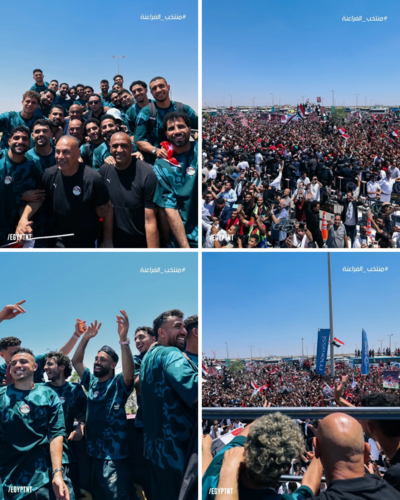
They may not have won the World Cup, but they won our hearts and respect (and, arguably, the world's). It turns out, the scoreboard didn’t actually matter all that much.
What mattered was that our team played with honor, stood their ground, and gave their all.
The president even awarded them the Order of Merit and commomerative medals in recoginiton of their outstanding perfomarmence and efforts during the tournament.
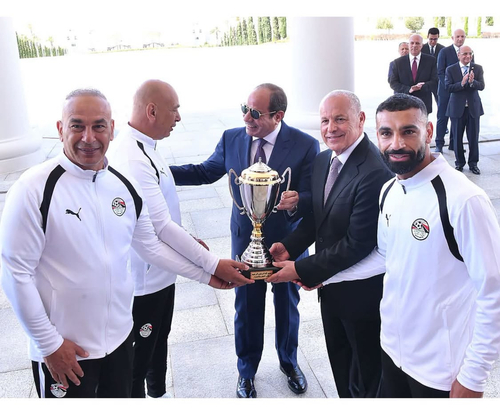
A lot of people remarked that seeing the team back home, happy after realizing everyone at home was actually proud of them not angry at their loss, has helped gradually ease the heaviness Egyptians have been feeling since the day of the match.
Simply seeing them happy made everyone happy.
6- Echoes of Ma’at
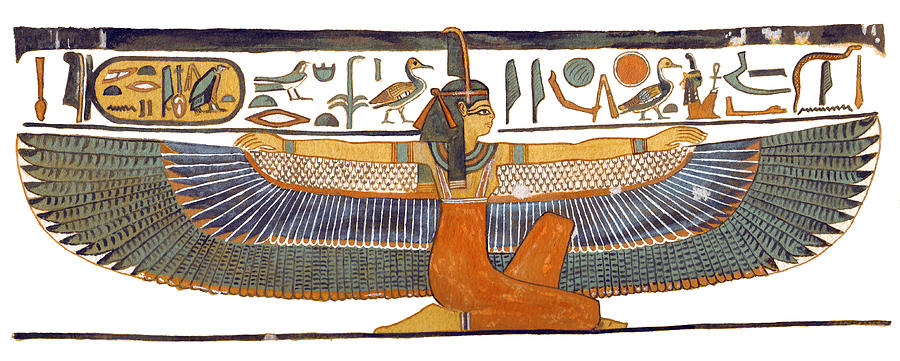
This moment also connects to something ancient in the Egyptians; the concept of Ma’at, the ancient Egyptian principle of truth, justice, balance, and moral order.
Whether consciously or not, those ideals have echoed through Egyptian culture for millennia.
Modern Egypt has its problems with daily struggles that can make Ma’at feel far away. But when push comes to shove, especially in moments like this, those values rise up, almost as if they are in the Egyptian DNA.
We felt the absence of fairness on that pitch, yet we responded by restoring harmony in our own way; through compassion for our players, collective support, humour, and laughter to balance out the heaviness and disappointment, and choosing integrity and pride over anger and bitterness.
7- Moral of the Story
Chasing a dream is always a risk. Sometimes you'll reach it and sometimes you'll come painfully close.
We spend so much of our lives chasing results that we often forget the result is only one part of that story.
If the dream is really worth pursuing, don't let the outcome be the only thing that defines the experience.
Give your best, stand up for what you believe is right, show support and compassion to those around you, and take pride in a journey that was honorable, regardless of where it ended.
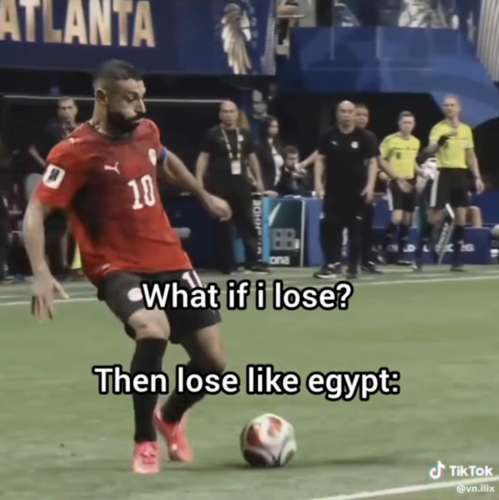
And if you’re going to lose, lose like Egypt.




回應 (0)