
 English
 日本語
日本語
 한국어
한국어
 简体中文
简体中文
 繁體中文
繁體中文
 Italiano
 español
 Deutsch
 Русский


Learning Is a Process, Not a Product
Learning is often seen as a product measured by grades, certificates, and degrees. However, true learning is much more than a final result. It is a continuous process of gaining knowledge, developing skills, making mistakes, and improving over time. The statement "learning is a process, not a product" emphasizes that education is about the journey of growth rather than simply achieving an end goal.
To begin with, learning occurs gradually through practice and experience. No one becomes an expert overnight. For example, when a child learns to ride a bicycle, they usually fall several times before mastering the skill. Each mistake teaches balance, coordination, and confidence. The success of riding the bicycle is not as important as the learning experiences gained through repeated effort. This shows that learning develops through a process of trial and error.
Furthermore, focusing only on the final product can prevent meaningful learning. Many students study only to pass examinations and obtain good grades. After the exams, however, they may forget most of what they memorized. In contrast, students who focus on understanding concepts are more likely to retain knowledge and apply it in real-life situations. For instance, a medical student who genuinely learns how the human body functions will be better prepared to diagnose and treat patients than someone who studies only to pass tests.
Real-life success stories also demonstrate that learning is a process. One famous example is Thomas Edison, the inventor of the electric light bulb. Before achieving success, Edison conducted thousands of unsuccessful experiments. Instead of viewing these attempts as failures, he considered them opportunities to learn what did not work. His persistence eventually led to one of the most important inventions in history. This example illustrates that learning often involves patience, resilience, and continuous improvement.
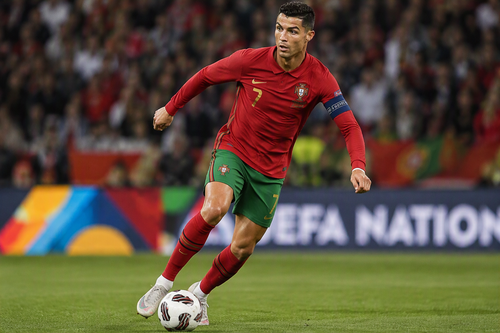
Similarly, athletes become successful through a long learning process. Cristiano Ronaldo, one of the greatest football players in the world, did not achieve excellence through talent alone. He spent years practicing, training, and improving his skills. His achievements are the result of constant learning and hard work rather than a single moment of success. His story reminds us that growth comes from dedication to the process.
Moreover, learning continues throughout life. A good example is people who learn new technologies in their careers. When computers and artificial intelligence became more common in the workplace, many professionals had to acquire new digital skills. Those who embraced continuous learning were able to adapt and remain successful. This demonstrates that learning does not end with graduation but continues as society and technology evolve.
In addition, the process of learning helps individuals develop important personal qualities such as patience, perseverance, critical thinking, and self-discipline. These qualities are often more valuable than certificates because they prepare people to face future challenges. For example, an entrepreneur starting a business learns from both successes and failures. Each experience contributes to their growth and increases their chances of future success.
In conclusion, learning should not be viewed as a product that can be completed and stored away. Instead, it is a lifelong process of exploration, practice, reflection, and improvement. Real-life examples such as learning to ride a bicycle, Thomas Edison's experiments, Cristiano Ronaldo's training, and professionals adapting to new technology all show that success results from continuous learning. By valuing the process rather than focusing only on the outcome, individuals can develop deeper knowledge, stronger skills, and a lifelong passion for learning.
Key message:
The product of learning may be a grade, certificate, or achievement, but the process of learning is what truly shapes a person's knowledge, character, and future success.


回應 (0)