
 English
 日本語
日本語
 한국어
한국어
 简体中文
简体中文
 繁體中文
繁體中文
 Italiano
 español
 Deutsch
 Русский


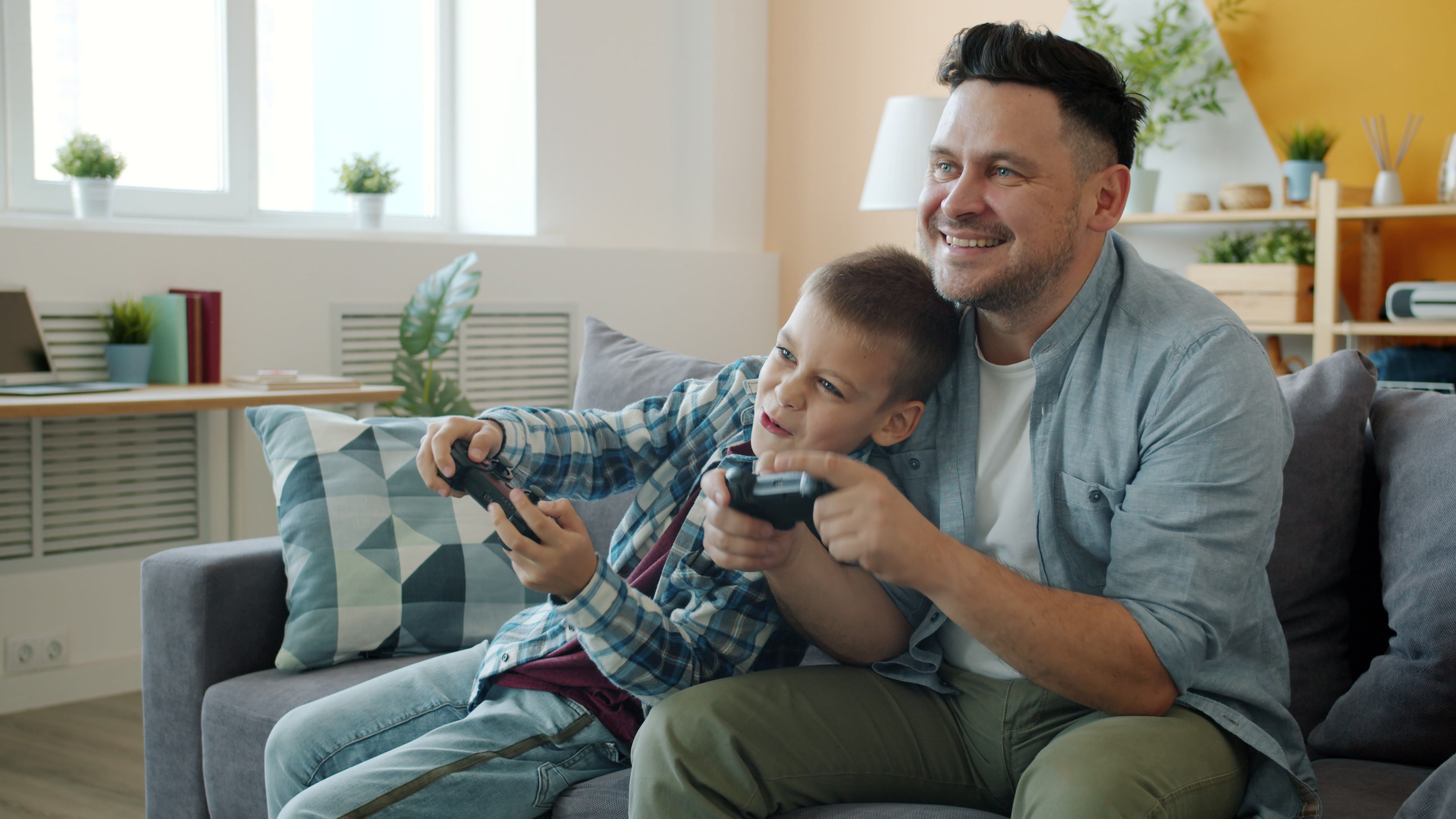
Recently, I was talking to some former coworkers who spoke very good English or Spanish.
I was curious, so I asked them how they had learned.
Their answers surprised me.
Some of them told me that they had studied the language, but they also spent a lot of time playing online games:
- They were chatting with other players.
- They were reading game dialogues.
- They were trying to understand instructions.
- They were discovering the stories of the games.
- And sometimes, they simply needed to understand what was happening to continue playing.
This made me think about something important for children learning a language:
"When we are interested in understanding something, we have a reason to listen and read."Learning Spanish while playing
Imagine a child playing a game in Spanish.
(The character starts running.)
The child may not need a translation. The action itself gives meaning to the word.
Later, another character says:
(The child connects the words with what they see on screen.)
The child is learning from the combination of:
Spanish + images + sounds + actions + context.
This is related to the idea of comprehensible input, associated with linguist Stephen Krashen. In simple terms, comprehensible input is language that learners can understand because they have enough context to understand the message, even when they do not know every word.
Games give children a reason to understandThis is one of the interesting things about video games. A child usually does not think:
"I need to study this Spanish verb."
They think:
"What do I have to do?"
That question creates a reason to understand the language. If the game says:
"Busca la llave."
and the child needs to find the key to continue; the sentence has a purpose. Learning happens as part of the activity.
It does not have to be only video gamesThe same idea can be used with pictures and sounds:
- A picture of a kitchen introduces: la mesa, la silla, el plato, el vaso
- A sound of a door opening accompanies: "Abre la puerta."
- A character running accompanies: "Corre."
- A character looking around introduces: "¿Dónde está?"
Games can also encourage children to read. Many games contain short conversations, instructions, signs, menus and stories. At first, they may understand only a few words, but as they recognize them repeatedly, expressions become familiar through something they already enjoy.
The important part is meaningful exposure.This does not mean that children should simply play games for hours and expect to become fluent. Games are not a replacement for teaching; they are one possible source of meaningful language exposure.
A teacher can use what happens in a game to ask questions and encourage communication:
"¿Dónde está el personaje?"
"¿Qué está haciendo?"
"¿Qué pasó?"
"¿Qué crees que va a pasar?"
Now the child is not only listening—they are using Spanish to communicate.
Maybe learning does not always look like studying.Some of the people I met learned languages through a combination of study and things they genuinely enjoyed. They played, chatted, read, listened, and wanted to understand.
Sometimes, a child does not need to be told:
"Now you are learning Spanish."
They simply need a reason to understand it.


Comments (0)