
 English
 日本語
日本語
 한국어
한국어
 简体中文
简体中文
 繁體中文
繁體中文
 Italiano
 español
 Deutsch
 Русский


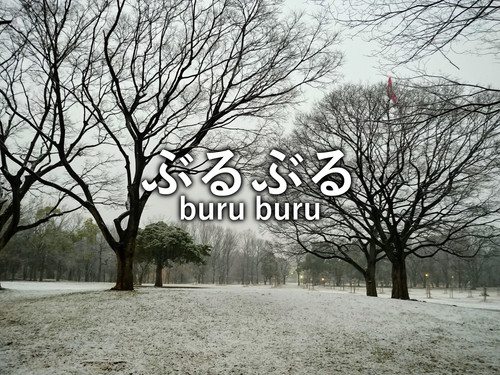
ぶるぶる[ブルブル]:
寒さや恐怖などで体が震える様子を表します。
Onomatopoeic word describing a shivering with cold, fear etc.
Onomatopée exprimant un frisson causé par le froid, la peur etc.
Onomatopoeic word describing a shivering with cold, fear etc.
Onomatopée exprimant un frisson causé par le froid, la peur etc.
寒(さむ)い日(ひ)には家(いえ)でおいしいものを食(た)べるに限(かぎ)ります。
Quand il fait froid, rien ne vaut de bonnes choses à manger à la maison.
On a cold day, there’s nothing better than eating something delicious at home.
あっという間(ま)に1月(いちがつ)も終(お)わり。
Janvier va se terminer en un clin d’œil.
January is coming to an end in the blink of an eye.
写真(しゃしん)とオノマトペで今月(こんげつ)を振(ふ)り返(かえ)ります。
Je jette un regard sur ce mois-ci avec mes photos et quelques onomatopées.
I’m looking back on this month with my pictures and some onomatopoeic words.
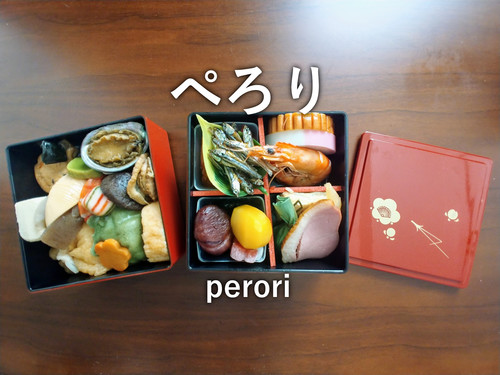
一人用お節。ぺろりと食べられます。
“Osechi” pour une personne. Je peux le manger d’un seul coup.
“Osechi” for one person. I can eat it up in one go.
****************************************************************************
<語彙(ごい)と文法(ぶんぽう)・vocabulaire et grammaire・vocabulary and grammar>
・一人用(ひとりよう):pour une personne / for one person
・お節(料理)(おせち(りょうり)):
Plat traditionnel japonais pour le nouvel an contenu dans une boîte laquée qui s’empile sur plusieurs étages. Chaque plat a un sens comme la "bonne santé” ou la "prospérité".
Japanese traditional New Year’s dish packed in piled lacquer boxes. Each dish has a meaning
such as "good health" or "prosperity".
・ぺろり:舌(した)で舐(な)めたり、一気(いっき)に食(た)べたりする様子(ようす)を表(あらわ)すオノマトペ
onomatopée exprimant le mouvement de la langue sur les lèvres ou le fait de ne faire qu’une bouchée de qqch
onomatopoeic word describing the licking of lips or eating up something in one go
・と:オノマトペや副詞(ふくし)の後(うし)ろに付(つ)いて、動作(どうさ)や動(うご)きの様態(ようたい)を表(あらわ)します。
On met souvent と(to) après une onomatopée ou un adverbe pour qualifier son mode d’action ou de mouvement.
と(to) is often put behind an onomatopoeia or an adverb to qualify the mode of action or movement.
・食(た)べられます:動詞(どうし)「食べる」の可能形(かのうけい)+ます形
forme potentielle du verbe "taberu"(manger) + forme "masu"
potential form of the verb "taberu"(eat) + "masu" form
*****************************************************************************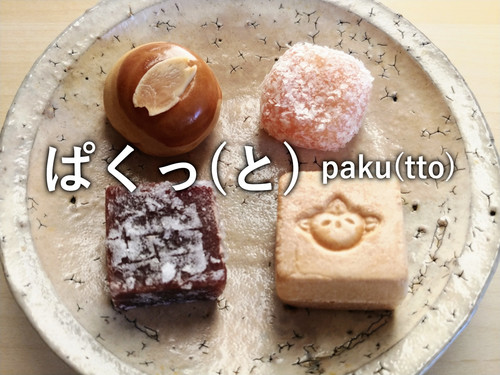
ぱくっと一口サイズ
****************************************************************************
<語彙(ごい)と文法(ぶんぽう)・vocabulaire et grammaire・vocabulary and grammar>
・ぱくっ[パクッ](paku’):
口(くち)を開(あ)けて、一口(ひとくち)で食(た)べる動作(どうさ)を表(あらわ)すオノマトペ
onomatopée exprimant l’action d’ouvrir la bouche pour manger qqch d’un seul coup
onomatopoeic word describing the action of opening the mouth to eat something up
・と:オノマトペや副詞(ふくし)の後(うし)ろに付(つ)いて、動作(どうさ)や動(うご)きの様態(ようたい)を表(あらわ)します。
On met souvent と(to) après une onomatopée ou un adverbe pour qualifier son mode d’action ou de mouvement.
と(to) is often put behind an onomatopoeic word or an adverb to qualify the mode of action or movement.
・一口(ひとくち):une bouchée / a bite
・サイズ:taille / size
****************************************************************************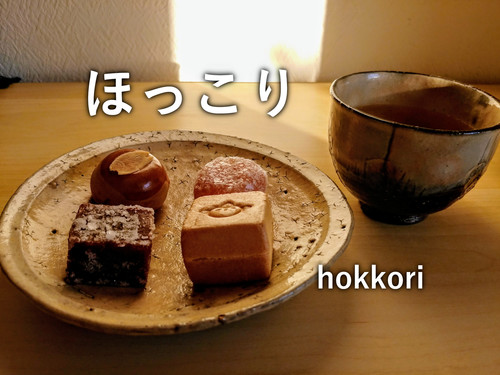
ほっこり:
安堵(あんど)や快適(かいてき)さ、時(とき)には温(あたた)かさといった感覚(かんかく)を表(あらわ)すオノマトペ[副詞(ふくし)とみなされることもあり]。方言(ほうげん)に由来(ゆらい)していて、各(かく)方言に様々(さまざま)な意味(いみ)があります。私(わたし)の出身地(しゅっしんち)では、仕事(しごと)や勉強(べんきょう)などを頑張(がんば)った後(あと)、疲(つか)れた時(とき)に使(つか)います。
onomatopée (aussi considérée comme un adverbe) exprimant une sensation de soulagement et de confort, et parfois de chaleur. Ce mot vient de dialectes dans lesquels il a différents sens. Dans ma ville natale, on l’utilise quand on est fatigué après un gros effort.
onomatopoeic word (also considered as an adverb) describing a feeling of relief and comfort, and sometimes of warmth. This word comes from dialects in which it has different meanings. In my hometown, we use it when we are tired after a hard work.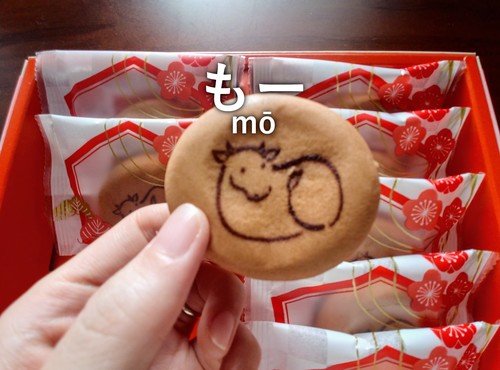
もー:meuh / moo
2021年(にせんにじゅういちねん)は丑年(うしどし)です。
2021 est l'année du bœuf (dans le zodiaque oriental).
2021 is the year of the ox (in the oriental zodiac).
挨拶(あいさつ)が遅(おそ)くなりましたが、今年(ことし)もよろしくお願(ねが)いします。
Malgré mes salutations tardives, je vous souhaite une excellente année 2021, pleine de santé et de bonheur.
In spite of my late salutation, I do wish you a healthy and happy 2021.
