
 English
 日本語
日本語
 한국어
한국어
 简体中文
简体中文
 繁體中文
繁體中文
 Italiano
 español
 Deutsch
 Русский


When learning Chinese, many students meet Chinese idioms.
学习中文的时候,很多学生都会遇到成语。
Chinese idioms are usually short, but they often have interesting stories behind them.
成语通常很短,但是它们背后常常有很有意思的故事。
Today, let’s learn one useful Chinese idiom:
今天,我们来学习一个很实用的成语:
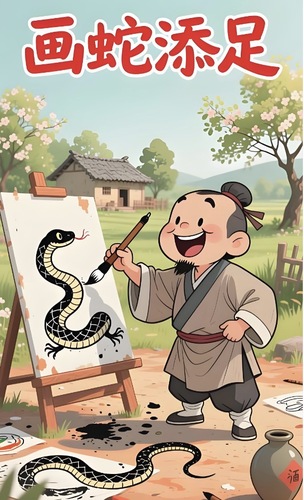
画蛇添足
huà shé tiān zú
1. What does 画蛇添足 mean?
1. “画蛇添足”是什么意思?
Literally, 画蛇添足 means:
从字面上看,“画蛇添足”的意思是:
to draw a snake and add feet to it
画了一条蛇,又给蛇添上脚
But snakes do not have feet.
可是,蛇本来是没有脚的。
So this idiom means:
所以,这个成语的意思是:
to do something unnecessary and make the result worse
做了多余的事,反而把事情弄坏了
2. The story behind the idiom
2. 成语背后的故事
A long time ago, several people were having a drawing competition.
很久以前,几个人比赛画蛇。
The person who finished drawing the snake first could drink a pot of wine.
谁先画完蛇,谁就可以喝一壶酒。
One man finished very quickly.
有一个人很快就画完了。
But he thought, “I still have time. Let me add feet to the snake.”
可是他想:“我还有时间,不如给蛇画上脚吧。”
When he was adding feet, another person finished drawing a snake.
当他正在给蛇添脚的时候,另一个人也画完了蛇。
That person said, “A snake has no feet. Your drawing is not a snake anymore.”
那个人说:“蛇没有脚。你画的已经不是蛇了。”
So the first man lost the wine.
所以,第一个人失去了那壶酒。
This is the story of 画蛇添足.
这就是“画蛇添足”的故事。
3. How do we use it today?
3. 今天我们怎么使用这个成语?
Although this story comes from ancient China, we still use this idiom in modern life.
虽然这个故事来自古代中国,但是今天我们仍然经常使用这个成语。
We can use 画蛇添足 when someone does something extra, but that extra thing is not helpful.
当一个人做了多余的事情,而且这个多余的事情没有帮助时,我们就可以用“画蛇添足”。
Sometimes, doing more is not always better.
有时候,做得更多不一定更好。
4. Modern examples
4. 现代生活中的例子
Example 1:
例子一:
Your presentation was already very clear, but you added too many extra details at the end. Now the audience feels confused.
你的演讲本来已经很清楚了,但是最后你又加了太多细节,结果听众反而 confused 了。
You can say:
你可以说:
最后那些内容有点画蛇添足。
The last part was a little unnecessary and made things less clear.
Example 2:
例子二:
A student writes a good Chinese sentence, but then adds many complicated words that do not fit.
一个学生写了一个很好的中文句子,但是又加了很多不太合适的复杂词语。
The teacher may say:
老师可能会说:
这个句子本来很好,后面加的部分有点画蛇添足。
The sentence was already good. The part you added was a bit unnecessary.
5. Practice
5. 练习
Try to answer these questions in Chinese:
试着用中文回答这些问题:
- Have you ever done something that became “画蛇添足”? 你有没有做过一件“画蛇添足”的事?
- In your work or study, when can we use this idiom? 在你的工作或学习中,什么时候可以用这个成语?
- Do you think “doing more” is always better? Why or why not? 你觉得“做得更多”一定更好吗?为什么?
Chinese idioms are not only words. They are stories, culture, history, and wisdom.
成语不只是词语。它们也是故事、文化、历史和智慧。
If you want to learn more Chinese idioms and understand how to use them naturally in modern life, you are warmly welcome to join my new lesson:
如果你想学习更多中国成语,并且了解这些成语在现代生活中怎样自然、地道地使用,欢迎来参加我的新课:
One Idiom, One Story: Chinese History, Culture & Wisdom
一课一成语:故事、历史与文化



回應 (0)