I gently support your Chinese learning for Taiwan travel and daily conversation from the perspective of an occupational therapist
Nice to meet you.
I’m Rui from Taiwan.
My hobbies are photography, hiking, camping, motorcycle touring, and watching anime. I enjoy walking in nature and taking photos while traveling.
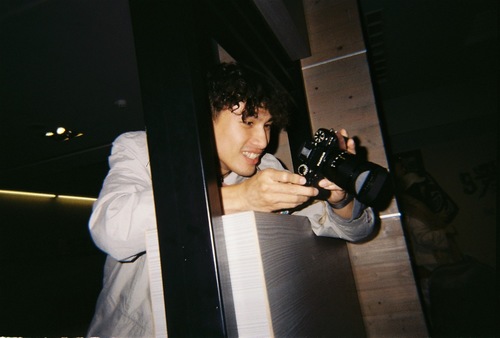

In Taiwan, I worked as an occupational therapist, supporting children’s development and learning.
I currently live in Japan and work in child support.
I am also a foreign language learner myself, so I understand these feelings very well:
“I studied grammar, but I freeze when it comes to conversation.”
“I’m not confident in my pronunciation or tones.”
“I want to try speaking even a little Chinese when traveling in Taiwan.”
“I want to speak more naturally with my Taiwanese friends or partner.”
In my lessons, I do not explain difficult grammar all at once.
Instead, we practice practical Taiwanese Mandarin step by step, in small and manageable parts.
I can also support you in Japanese/English when needed,
so beginners can join my lessons with confidence.
What you can learn in my lessons
1. Chinese you can use when traveling in Taiwan
We will practice useful expressions for restaurants, cafés, night markets, hotels, asking for directions, shopping, and more.
These are expressions that are truly useful in Taiwan.
For example:
“I’ll take this.”
“What do you recommend?”
“Please don’t make it too spicy.”
“I want to go here.”
“Could I have a bag?”
We can practice these expressions together, including pronunciation and tones.
2. Pronunciation and tone practice for beginners
Chinese is a language where many beginners struggle with pronunciation and tones at first.
But it is completely okay if you cannot do it perfectly from the beginning.
I will briefly explain the differences between Chinese and Japanese pronunciation,
and we will slowly practice the sounds that Japanese speakers often find difficult.
3. Daily conversation for speaking naturally with Taiwanese people
Some expressions are correct in textbooks,
but are not used very often in daily conversation.
In my lessons, we will practice expressions like:
“Taiwanese people often say it this way.”
“This expression sounds more natural.”
“From a Japanese perspective, you might want to say it this way, but in Chinese it is a little different.”
In this way, we will practice natural conversational expressions together.
4. Gentle explanations based on each learner’s pace
As an occupational therapist, I have supported children’s development and learning.
Because of that experience, I value observing where each learner is having difficulty
and explaining things by breaking them down into smaller parts.
“I have trouble remembering too many things at once.”
“I want to learn slowly.”
“I want to practice many times until I gradually get used to it.”
If this sounds like you, please feel free to join my lessons with confidence.
Recommended for people who:
・Want to learn Taiwanese Mandarin
・Want to start learning Chinese from zero
・Want to carefully practice pronunciation and tones
・Want to learn expressions useful for traveling in Taiwan
・Want to speak more naturally with Taiwanese friends, partners, or coworkers
・Want to learn not only textbook Chinese, but also natural expressions
・Want to learn slowly at their own pace
・Feel nervous about making mistakes and are not confident in conversation
What I value in my lessons
What I value most is:
Rather than “not making mistakes,” it is more important to “try to communicate first.”
When speaking a foreign language, making mistakes is completely natural.
Instead of trying to make perfect sentences from the beginning,
let’s first try saying what you want to say.
From there, we will gradually adjust it into more natural expressions.
For beginners, I will proceed slowly while checking your understanding.
For intermediate and advanced learners, I can use more Chinese during the lesson
and help you practice natural conversation and correct your expressions.
Finally
At first, Chinese pronunciation and tones may feel a little difficult.
But if you practice little by little, you will surely begin to feel the joy of being able to communicate.
If you are interested in Taiwanese language, culture, and daily conversation,
let’s enjoy practicing together.
I look forward to seeing you in class!

 English
 日本語
日本語
 한국어
한국어
 简体中文
简体中文
 Italiano
 español
 Deutsch
 Русский


