
 English
 日本語
日本語
 한국어
한국어
 简体中文
简体中文
 繁體中文
繁體中文
 Italiano
 español
 Deutsch
 Русский


今日は 「~とき」の ワナ! (English below)
さてクイズです!
下の ①と ②、日本の家で どっちが 正しい?
下の ①と ②、日本の家で どっちが 正しい?
① 家に はいったとき くつを ぬぎます
② 家に はいるとき くつを ぬぎます
↓
↓
↓
↓
せいかいは ② です!
さて、何が ちがうんでしょう?
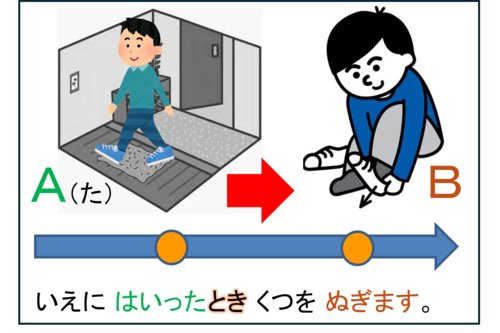
絵を 見てください。
①
②
こんな イメージに なります。
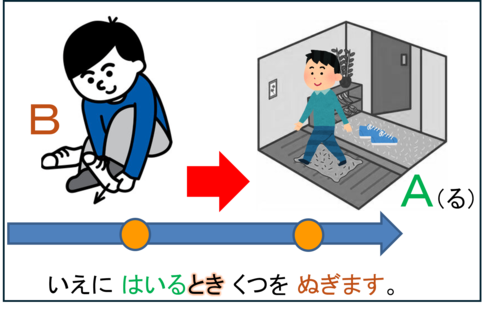
だから、
「家に はいったとき くつを ぬぎます」の アクションの順番(じゅんばん)は
= 『家に はいる 』 → 『くつを ぬぐ』
になってしまい、日本人は ショックを受けます。(がーん!)
ですから必ず 家に入るとき くつを ぬいでくださいね!
他の例文としては、
・たべるとき 「いただきます」と 言います。 : 「いただきます」 → 食べる
・たべたとき 「ごちそうさまでした」と 言います。: たべた → 「ごちそうさまでした」
・いえを でるとき まどを しめます。 : まどを しめる → いえを 出る
・いえを でたとき かぎを しめます。 : いえを 出る → かぎを しめる
では もんだい!
★『寝る前に 服を ぬぎます』、と言いたいときは、
下の ① と ②どっちが 正しいですか?
下の ① と ②どっちが 正しいですか?
① ねたとき ふくを ぬぎます
② ねるとき ふくを ぬぎます
せいかいは
↓
↓
↓
↓
②!
① は ちょっと むずかしいかもしれませんね!(笑)
レッスンでは 「AまえにB」と 「A(辞書)ときB」の ちがいも 説明します♪
じゃあ またね~
Today’s topic:
The trap of “~とき” in Japanese!
Quick quiz!
Which sentence is correct in a Japanese house?
① 家に入ったとき くつをぬぎます
(ie ni haitta toki kutsu o nugimasu)
② 家に入るとき くつをぬぎます
(ie ni hairu toki kutsu o nugimasu)
↓
↓
↓
The correct answer is… ②!
So, what’s the difference?
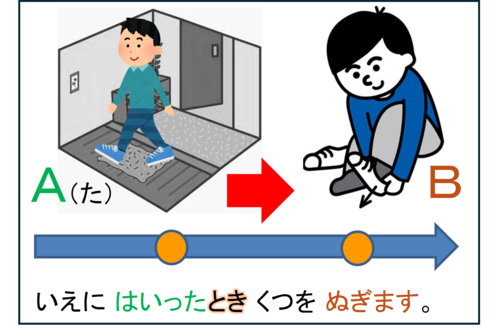
Look at the picture.
①
①
②
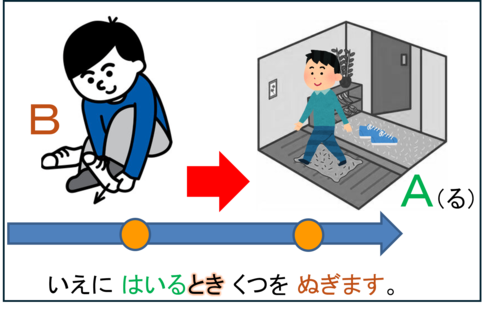
This is the image Japanese people get.
So, in the sentence:
「家に入ったとき くつをぬぎます」
the order of actions becomes:
“enter the house” → “take off shoes”
That means you entered the house WITH your shoes on (gaaaan!)
Japanese people would be shocked!
So in Japan, please make sure to take off your shoes
WHEN entering the house:
「家に入るとき くつをぬぎます」ie ni hairu toki kutsu o nugimasu
Here are some more examples:
・たべるとき 「いただきます」と言います。
taberu toki "itadakimasu" to iimasu
taberu toki "itadakimasu" to iimasu
: “itadakimasu” → eat
・たべたとき 「ごちそうさまでした」と言います。
tabeta toki "gochisou sama deshita" to iimasu
tabeta toki "gochisou sama deshita" to iimasu
: eat → “gochisousama deshita”
・いえをでるとき まどをしめます。
ie o deru toki mado o shimemasu
ie o deru toki mado o shimemasu
: close the window → leave the house
・いえを でたとき かぎを しめます。
ie o deta toki kagi o shimemasu
: leave the house → lock the door
: leave the house → lock the door
★ Now another quiz!
How do you say:
“I take off my clothes before sleeping”?
① ねたとき ふくをぬぎます neta toki fuku o nugimasu
② ねるとき ふくをぬぎます neru toki fuku o nugimasu
The correct answer is…
↓
↓
↓
② !
① sounds a little funny because it means:
“take off clothes AFTER sleeping”
In my lessons, I also explain the difference between:
「A mae ni B」 and
「A(dictionary form)toki B」
See you next time~! matane!


回应 (0)