
 English
 日本語
日本語
 한국어
한국어
 简体中文
简体中文
 繁體中文
繁體中文
 Italiano
 español
 Deutsch
 Русский


今日のテーマは 『見えます』と 『見られます』! English below ↓
★ではクイズです!★
サムネイルの絵の状況で、
下の文で 合っているのは ① ? ②?
下の文で 合っているのは ① ? ②?
・ホテルの へやから うみが ( )。
①見えます
②見られます
こたえは、
↓
↓
↓
↓
↓
答え:①『見えます』です。
どうして『見られます』は 不自然(ふしぜん) なんでしょう?
まず『Aが 見えます』の イメージは、
「なにもしないけど、Aが 目に はいります」というイメージです。
これは、『聞こえます』も 同じです。下の絵を見てください。
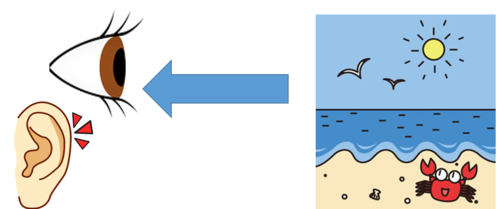
では『見られます』は なんでしょう?
・・・そうですね。 『見られます』は、
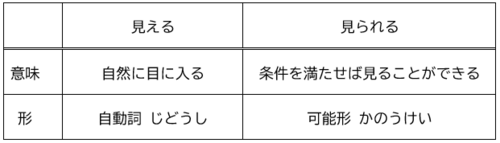
『みます』の 可能(かのう)フォームですね。
『みます』の 可能(かのう)フォームですね。
下の例で 『見えます/聞こえます』『見られます/聞けます』のニュアンスを
感じてください。
感じてください。
◆『見えます/聞こえます』:
・山の上から 京都の町が 見えます。
= 山の上に行けば、自然に 目に入る
・めがねが ないと、何も 見えません
= めがねを かければ 自然に目に入る
・外から ねこの声が 聞こえます。
= 何もしなくても、耳に入る
・声が小さくて、聞こえません。
= 声が大きくなれば、自然に耳に入る
◆『見られます/聞けます』(可能フォーム):
・お金を払えば、この映画が 見られます。
→ お金を払っただけでは、自然に映画が目に入らない
・テレビが こわれているから、テレビが 見られません。
→ テレビが なおっても、自然にテレビの画面は目に入らない。
・先生のレッスンを申し込めば、講義が聞けます。
→ レッスンを申し込んでも、自然に講義は 聞こえない。
どうでしょう? なんとなく 違いが 感じられましたか。
★では わかったかどうかクイズです!★
①晴れれば 富士山が( 見えます OR 見られます )。
②日本に行ったら 富士山が ( 見えます OR 見られます )。
こたえは
↓
↓
↓
↓
↓
↓
①見えます
②見られます
ですね!できたかな?

日本に きたけど・・・・
ちなみに『見えます/聞こえる』は自動詞で、『見る/聞く』は他動詞です。
◆まとめ◆
おっと
★今日は 宿題があるよ!
『海が見られる』は、どんな状況のときなら 使えるか 考えてみてくださいね!
もし わかったら、私に 教えてくださいね :)
では、みなさん、私の 他のコラムを 見たかったら、
私のプロフィールに来てくださいね。
私のプロフィールに来てくださいね。
私のプロフィールに来れば、コラムの一覧が “見られます”よ :)
では また~。
おっと
★今日は 宿題があるよ!
『海が見られる』は、どんな状況のときなら 使えるか 考えてみてくださいね!
もし わかったら、私に 教えてくださいね :)
Today's theme is "Miemasu" vs. "Miraremasu" !
★ Quiz time! ★
Given the image in the thumbnail,
Which one is correct, ① or ②?
ホテルの へやから うみが ( )。
Hoteru no heya kara umi ga ( ).
① 見えます (Mi e ma su)
② 見られます (Mi ra re ma su)
The answer is...
↓
↓
↓
↓
↓
Answer: ① Miemasu is correct.
Why is Miraremasu unnatural here?
First, the image of "A ga miemasu" is:
"Even if you do nothing, A comes into your eyes naturally."
The same is true for Kikoemasu (hear). Please look at the image below.
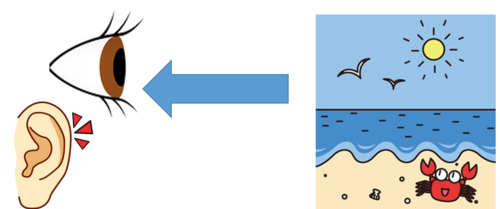
So, what is Miraremasu?
That's right. "Miraremasu" is the potential form of "Mimasu" (see).
Now, let's feel the nuance of
miemasu / Kikoeru and Miraremasu /Miraremasu through examples.
miemasu / Kikoeru and Miraremasu /Miraremasu through examples.
● miemasu / Kikoemasu (Natural perception)
山の上から 京都の町が 見えます。
Yama no ue kara Kyōto no machi ga miemasu.
→ If you go up the mountain, it naturally comes into your eyes.
めがねが ないと、何も 見えません。
Megane ga nai to, nani mo miemasen.
→ If you put on glasses, it naturally comes into your eyes.
外から ねこの声が 聞こえます。
Soto kara neko no koe ga kikoemasu.
→ Even if you do nothing, it comes into your ears.
声が小さくて、聞こえません。
Koe ga chiisakute, kikoemasen.
→ If the voice becomes louder, it naturally comes into your ears.
● Mirareru / Kikeru (Potential form — with conditions)
お金を払えば、この映画が 見られます。
Okane o haraeba, kono eiga ga Miraremasu.
→ Just paying money doesn't make the film come into your eyes naturally.
テレビが こわれているから、テレビが 見られません。
Terebi ga kowareteiru kara, terebi ga Miraremasen.
→ Even if the TV is fixed, the screen doesn't naturally come into your eyes.
先生のレッスンを申し込めば、講義が 聞けます。
Sensei no ressun o mōshikomeba, kōgi ga kikemasu.
→ Just applying for the lesson doesn't make the lecture naturally come into your ears.
How was that? Could you feel the difference?
★ Quiz to check your understanding! ★
① 晴れれば 富士山が( 見えます OR 見られます )。
Harereba Fujisan ga ( miemasu OR miraremasu ).
② 日本に行ったら 富士山が( 見えます OR 見られます )。
Nihon ni ittara Fujisan ga ( miemasu OR mi ra re ma su ).
↓
↓
↓
↓
↓
↓
Answers:
① 見えます (miemasu)
② 見られます (Miraremasu)
How did you do? :)

By the way, miemasu / kikoemasu are intransitive verbs, and
Miru / Kiku are transitive verbs.
Miru / Kiku are transitive verbs.
Now, if you want to see my other columns, please visit my profile!
If you come to my profile, you can see the list of my columns —
見られます (miraremasu) :)
See you next time!
★ Homework for you! ★
Think about this:
In what situation can you say "Umi ga Miraremasu"?
If you figure it out, please tell me! :)
One more point:
In patterns like "Xたら、Aが見える/聞こえる"
(If X happens, A is visible / audible)
Use "見える/聞こえる" when A naturally comes into your senses as soon as condition X is met.
Use "見られます/見られます" when more action or effort is needed after condition X.



Comments (0)