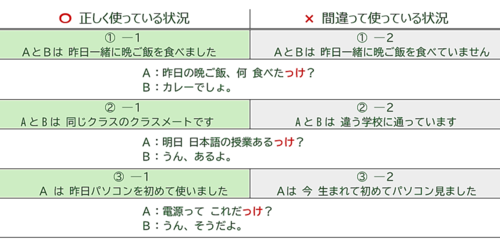
さて、上の会話の例から、『っけ?』が使える状況が 少し わかったでしょうか・・・。
そうです。
【 X っけ?】とは:
____________________________________
質問者(A)が、以前知っていた(はず)の情報(X)が正しいかどうか確認したいときに使う。
そのとき、A は「B がその答えを知っている」と思っている。
使い方は、大きく2つに分かれる:
1.『X っけ?』(Yes / No の確認)
例:明日、授業あるっけ?
2.『疑問詞 + っけ?』(答えの中身の確認)
例:これ、何だっけ?
____________________________________
というときに 使うことができます。
つまり、それぞれ下のような意味になります。
①
A:昨日の晩ご飯、何 食べたっけ?
= 昨日 私が晩ご飯に何を食べたか、Bさんは知っていますよね。
確認してもいいですか。
②
A:明日 日本語の授業あるっけ?
= たぶん明日 日本語の授業があるはずだけど、Bさんは知っていますよね。
確認してもいいですか。
③
A:電源って これだっけ?
= パソコンの電源は これだと思うけど、Bさんは知っていますよね。
確認してもいいですか。
④『疑問詞+っけ?』
A:これ 何だっけ?
= Bさんは これが何か知っていますよね。
私もたぶん知っていますが、もう一度確認してもいいですか。
『っけ?』を 使うと、すごく簡単に短く 言いたいことが言えますね!
★クイズ★の ① と ③ が 間違っている理由:
① Aさんは今日 初めてBさんの家に来ました
A:トイレは ここだっけ?
B:うん、そうだよ。
➡ Aは 初めてBの家に来たので、『っけ?』は使えません。
正しい聞き方:
『トイレは ここ/どこ ですか。』
③ AさんとBさんは 初めて来た場所にいます
A:トイレは ここだっけ?
B:わかんない。
➡ AもBも 初めての場所にいるので、『っけ?』は使えません。
正しい聞き方:
『トイレは ここ/どこ ですか。』
**************
さて皆さん、『っけ?』の意味と使い方が よく わかったでしょうか。
使い方が分かったら、みなさんも使ってみてくださいね。
ちなみに、この言い方はカジュアルな表現なので、
ビジネスシーンや、あまり親しくない人には 使わないように気をつけてくださいね!
ところで 次のJLPTの試験って いつでしたっけ?
受験する人は がんばってくださいね!
いつも皆さんの日本語の上達を 応援しています :)
Today's topic is "~(da) kke?", which Japanese people use a lot in casual conversation.
You hear it often, but what exactly is this "kke?"
A: これ 何だっけ? (Kore nan da kke?)
B: それは 〇〇だよ。 (Sore wa 〇〇 da yo.)
A: あ、そうだった! (A, sō datta!)
You hear this kind of exchange a lot, right?
________________________________________
★ Quiz Time! ★
Which of the following conversations (①–③) uses "~kke?" correctly?
① A is visiting B's house for the first time today.
A: トイレは ここだっけ? (Toire wa koko da kke?)
B: うん、そうだよ。 (Un, sō da yo.)
② A used B's bathroom last week.
A: トイレは ここだっけ? (Toire wa koko da kke?)
B: うん、そうだよ。 (Un, sō da yo.)
③ A and B are in a place they are both visiting for the first time.
A: トイレは ここだっけ? (Toire wa koko da kke?)
B: わかんない。 (Wakannai.)
The answer is...
↓
↓
↓
↓
↓
②
________________________________________
Why are ① and ③ incorrect?
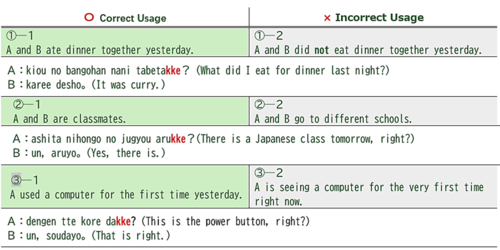
Let's look at some other examples.
________________________________________
So, what is "kke?"
From the examples above, you might have gotten a sense of when "kke?" can be used.
That's right.
【 X kke? 】 is used when:
The speaker (A) wants to confirm whether information (X) — which they should have known before — is correct.
At that time, A believes that "B knows the answer."
There are two main ways to use it:
1."X kke?" (Yes / No confirmation)
Example: 明日、授業あるっけ? (Ashita, jugyō aru kke?)
→ "Is there class tomorrow again?"
2."Question word + kke?" (Confirming the content of the answer)
Example: これ、何だっけ? (Kore, nan da kke?)
→ "What was this again?"
You can use it in these situations.
Let's look at the meanings of the examples:
①
A: 昨日の晩ご飯、何 食べたっけ?
= "You know what I ate for dinner yesterday, right?
Can I confirm with you?"
②
A: 明日 日本語の授業あるっけ?
= "I think there is a Japanese class tomorrow, but you know, right?
Can I confirm with you?"
③
A: 電源って これだっけ?
= "I think the computer power button is this one, but you know, right?
Can I confirm with you?"
④ "Question word + kke?"
A: これ 何だっけ? (Kore nan da kke?)
= "You know what this is, right, B?
I probably know too, but can I confirm with you one more time?
________________________________________
Using "kke?" lets you express what you want to say very simply and briefly!
________________________________________
★ Why ① and ③ in the Quiz are Incorrect ★
① A is visiting B's house for the first time today.
A: トイレは ここだっけ? (toire wa koko dakke?)
B: うん、そうだよ。(un, soudayo)
➡ Since A is visiting B's house for the first time, "kke?" cannot be used.
Correct way to ask:
「トイレは ここ/どこ ですか。」 (Toire wa koko / doko desu ka.)
③ A and B are in a place they are both visiting for the first time.
A: トイレは ここだっけ? (toire wa koko dakke?)
B: わかんない。 (wakan nai)
➡ Since both A and B are in a new place, "kke?" cannot be used.
Correct way to ask:
「トイレは ここ/どこ ですか。」 (Toire wa koko / doko desu ka.)
________________________________________
So everyone, did you get a good understanding of the meaning and usage of "kke?"
Once you understand how to use it, try using it yourselves!
By the way, this is a casual expression, so be careful not to use it in business situations or with people you are not close to!
________________________________________
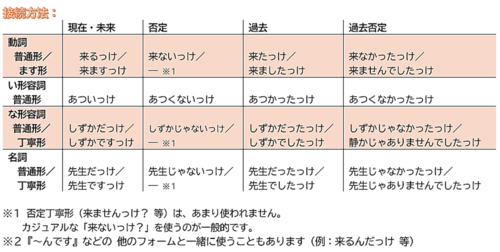
Connection Table
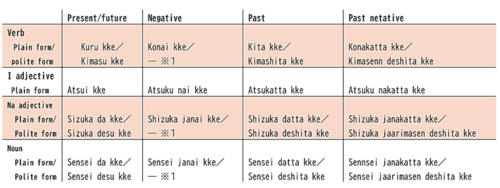
※1 The polite negative form (e.g., kimasen kke?) is not used very often. The casual 「konai kke?」 is more common.
※2 It can also be used with other forms like 「~ndesu」 (e.g., kuru n da kke?).
By the way, Tsugi no JLPT no shiken wa itsu da kke?
Good luck to everyone taking it!
I'm always cheering for your Japanese improvement! :)

 English
 日本語
日本語
 한국어
한국어
 简体中文
简体中文
 繁體中文
繁體中文
 Italiano
 español
 Deutsch
 Русский





Comments (0)